Citizen Journalism is a recent journalism phenomenon that
has given the public a different meaning of receiving the news. The idea of
citizen journalism is that ordinary people without professional journalism
training are now able to use modern technology to capture events and globally
distribute them over the Internet via blogs, video sites, etc. Through this,
individuals are able to create, augment or fact-check professional journalists
and the media on their own or with a group. Mark Glaser of PBS writes of a few
examples of how citizen journalism is being used: “for instance,” he said, “you
could fact-check a newspaper article from the mainstream media and point out
factual errors or bias on your blog or videotape a newsworthy event and post it
to YouTube.”

For the average person, this should be considered a
great development in the field of journalism. I, for instance, was quite
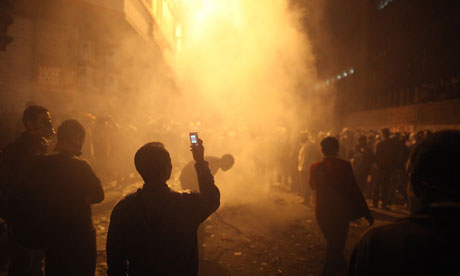
impressed with social media and similar sites during the revolutions that brought rise to the Arab Spring. Without the modern day technologies and the user-generated content
that the people across the world were able to upload to the internet, the revolutions may have
never occurred or gotten so much support. Citizen journalism is a monumental
step in increasing the globalization of countries and seeing unedited,
first-hand newsworthy throughout the world. It is a way for everyone to be
involved in the media and of “fulfilling their first amendment right of freedom
of expression.” And as technology continues to evolve and publishing platforms
become easier and more versatile, citizen journalism will continue to grow and
change the way people access their news.
But
citizen journalism has not received as much praise from traditional
journalists. Many professionals believe that “only a trained journalist can
understand the rigors and ethics involves in reporting the news.” Additionally,
they view citizen journalists with skepticism, especially when they are “proponents of the topics they write about.” This leads to the people saying that citizen
journalists don’t hold onto the traditional journalistic value of objectivity. Among
other criticisms, professional journalists have been quick to deem citizen
journalists as subjective, amateurish and inaccurate.
One
setback of citizen journalism that I do agree with is that unlike professional journalists, they may
have never learned of ethics in a formal setting. Responsible journalists research,
interview and report “through a lens of ethics.” This issue questions whether
it is possible for citizen journalists to cover tragic news stories without sensationalizing
them or without re-victimizing the victims. On the issue, professional
journalists believe that just because something happened does not mean they
should saturate all forms of media with it. There is also the issue of
anonymity. Behind the privacy wall of the internet, users remain anonymous.
Because of this, individuals are able to upload false information or bad data
without any repercussions.
However,
just because professional journalists have an ethical code does not mean that
they always consider the code in media. It has become the case that much of
network news is viewed as relatively unethical when it comes to reporting. Programs
rather focus on visually exciting events or popular culture rather than worldly
issues. This is where citizen journalism is beneficial. London School of
Economics professor Charlie Beckett said that, “to rely on conventional media
would return us to a more closed world because mainstream journalists literally
can’t get to some of these stories.” And sure, there is some bad information from
citizen journalists, but most of that stuff gets ignored. In fact,since citizen journalism's rise in
popularity, there has never been a significant instance when false citizen
journalism has had a serious impact.

I’m
writing on the subject of citizen journalism because of the discussion in class
on new media ethics and the concept of citizen journalism. In class, there were
various criticisms of citizen journalism that we discussed. I found myself
disagreeing with a few of the criticisms and thought about addressing the
benefits of citizen journalism. However, that is not to say that I completely
disagreed with the criticisms. As I previously mentioned, there are a few issues
with the popularity of citizen journalism. Additionally, I believe that there
should be a place for formal ethics in citizen journalism and it is up to these
bloggers and other “amateurs” to with objectivity. But as of now, I view citizen
journalism in a good light and am excited to see it develop.
Sources:

No comments:
Post a Comment